
The weekend field guide
Model train scales and gauges explained
A plain-language guide to model train scales and gauges, why they matter at a train show, how to tell them apart and how to avoid buying the wrong size.
Scale is how large a model is compared with the real train, and gauge is the distance between the rails. At a train show, the most important habit is to confirm the scale before you pay, because locomotives, cars and track made for one scale generally do not run with another. A great price on the wrong size is not a bargain.
This guide explains the common scale names you will see on tables, why track and power matter as much as size, how toy trains differ from scale models, and how to use a show to decide what to start with. Names and practices vary among makers and eras, so when in doubt, ask the seller what the item is and how it runs.
Scale and gauge are not the same thing
Scale describes how large a model is relative to the real locomotive or car it represents. A scale is usually written as a ratio, and the smaller the number of the ratio, the larger the model. Gauge describes the distance between the rails on which the model runs. Because a scale has a standard gauge, people often use the two terms as if they meant the same thing, and in casual conversation that is usually fine.
Where the difference matters is when a model has been built to run on track that is not correct for its scale, which is the case with some older toy trains and with some narrow gauge modeling. If you are unsure, ask the seller to confirm the scale and the track the item runs on.
Common names you will see on tables
Most train shows are filled with a handful of labels, usually letters. Here is a plain-language orientation. Details differ by maker, so treat it as a starting point rather than a rulebook.
- HO is a very popular size for home layouts, with a large range of locomotives, cars, structures and scenery.
- N is smaller and suits tight spaces and large layouts in small rooms.
- O is larger and has a long tradition, both as scale models and as classic toy trains.
- S is between HO and O in size and has a loyal following.
- G is large and robust, often used outdoors in gardens.
- Z is very small and is chosen by modelers who want a layout in very little space.
Each of these has its own track, wheel standards and range of models, and there are often sub-variations within a single label. Ask a knowledgeable seller if you are not sure which one a piece belongs to.
Reading a box
Most boxes show the scale or gauge somewhere on the end flap or the base, along with the maker's name and a catalog or model description. If the markings are worn or missing, ask the seller, and compare the item with others you can see on the table.
Why it matters when you buy
Rolling stock, track and locomotives made for one scale generally do not run on another. Couplers differ, wheels differ and the track is a different width. Buying a bargain locomotive that does not fit your layout means you either pay again to replace it or you hold an item you cannot use.
Before you pay, check the scale marked on the box or the item. Ask what track it needs and what power system it uses. Many models use direct-current power and some use command control systems that allow several trains to run on the same track independently. If you already have a layout, tell the seller what you run and ask whether the item will work with it. Sellers at shows are usually happy to say.
Toy trains and scale models
Some collectors seek older toy trains, which were designed for play and made to a size that suited the toy rather than to a strict scale. They often ran on three-rail track and were built to be rugged. Others collect and run scale models, which aim for realism and run on two-rail track.
Neither is better; they are different hobbies that overlap on the show floor. If you are buying a toy train, ask about era, maker and originality. If you are buying a scale model, ask about detail, running quality and the control system. Ask the seller what they know, and compare similar items before you decide. Our guide on selling at a train show explains how sellers are encouraged to describe condition.
How to use a show to choose a starting scale
Shows are an excellent place to see the sizes side by side. Layouts on display show what each scale looks like in motion and how much space it needs. Talk with the people running them. Ask why they chose their scale and what they would do differently.
Think about space, budget and what you want to do. If you have a small room, you may lean toward a smaller scale. If you want larger, more tactile trains or a garden layout, you may prefer a bigger one. If you want to restore a childhood set, the choice may already be made. Many modelers start with a simple oval and a starter set to see if they enjoy it, then grow from there.
Start sets, parts and compatibility
A starter set usually includes a locomotive, a few cars, track and a power supply. It is a convenient way to get going and is often a good deal at a show. Check that it is complete, that the track is the right type and that the power supply works.
If you buy used parts, bring a short list of what you have, including scale, track type and power. Ask the seller to confirm compatibility, and test it if the show allows. Keep receipts. A well-planned purchase from a show can save you a great deal of frustration later.
Frequently asked questions
Which scale should I start with?
It depends on your space and budget. Look at the layouts at a show and ask the people running them what they like about their scale.
Can I mix scales on one layout?
Generally no, since track and wheels differ. Some modelers do combine them for effect. Ask a knowledgeable seller or club member.
What is the difference between a model and a toy train?
Models aim for realism and are usually made to a consistent scale. Toy trains aim for play and often use their own sizes and track.
How do I check an item's scale?
Look at the box and the markings on the item, or ask the seller. If you are still unsure, do not buy until you are.
Do I need a special power supply?
That depends on the scale and the control system. Ask the seller what the item needs and whether it works with what you own.
Where can I find shows to see different scales?
Browse the state pages from the train show hub and check each listing's source for what the show offers.
Put your plan into motion
Find your next show.
Use the listing's official source to confirm the latest dates, public hours and entry rules.
Find shows in this directoryKeep planning
More useful guides
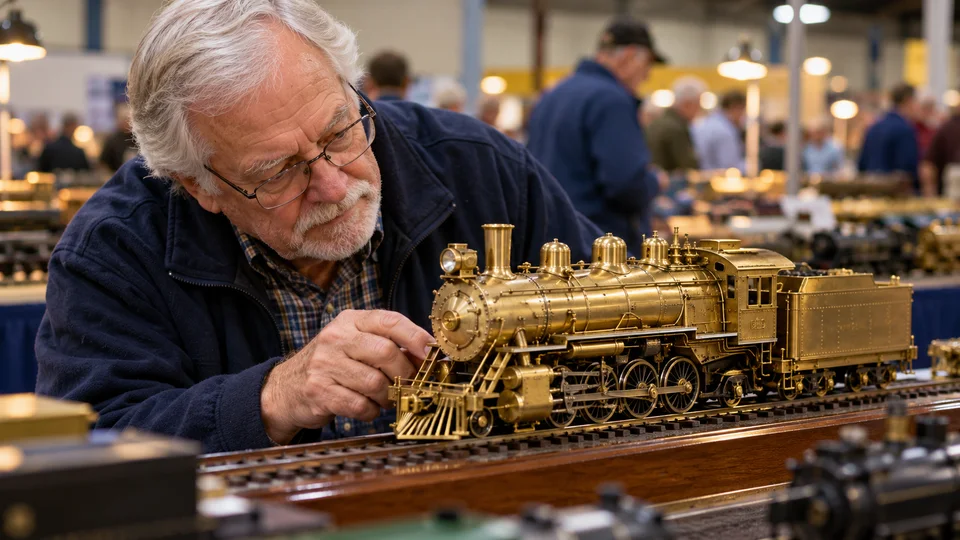
Planning your first show: a visitor checklist
Choose a show that suits your interests, confirm the practical details and keep the organizer’s information handy before you travel.
Read guide : Planning your first show: a visitor checklist
Preparing to sell at a model train show: a seller checklist
Confirm your seller application, table equipment, setup time and organizer terms before booking a place at a model train show.
Read guide : Preparing to sell at a model train show: a seller checklist
Selling at a train show: a table-holder guide
How to sell at a model train show: confirm table terms, sort stock by scale, describe condition honestly, test items and price for modelers and collectors.
Read guide : Selling at a train show: a table-holder guide
Train clubs and associations: how they fit with train shows
How model railroad clubs and train collector groups use train shows, what visitors can learn from them and what to ask before you join or visit a layout.
Read guide : Train clubs and associations: how they fit with train shows
Train swap meet etiquette for buyers and sellers
Simple habits that make a train swap meet pleasant for buyers and sellers: asking before you handle, fair haggling, clear aisles, tidy tables and packing up.
Read guide : Train swap meet etiquette for buyers and sellers
How to read a train show listing
What each part of a train show listing tells you, from dates and hours to venue, admission and source link, and what to confirm with the organizer before you go.
Read guide : How to read a train show listing